


TE Connectivity Z-PACK HM-Zd Connector System
TE Connectivity's (TE) Z-PACK HM-Zd Connector System is a high-speed, differential connector system that is compatible with the Z-PACK 2mm HM connector line. Z-PACK HM-Zd components provide Z-PACK 2mm HM users with a migration path for serial switching applications from 3.125Gbps to 5Gpbs. The system features a highly reliable dual-beam contact system with fully encompassing grounds dedicated to each differential pair. In addition, TE Z-PACK HM-Zd connector footprint is optimized for routability and system performance with the use of a 1.50mm x 2.50mm row to column grid. The connector design features a robust mating interface with built-in pre-alignment and polarization features. Applications for TE Z-PACK HM-Zd Connector System include switches, servers/blade servers, routers, and storage.
Features
- Extension of the Z-PACK 2mm HM product line
- 12Gb/s maximum operation speed
- 25mm module size
- 1.5mm contact pitch within a pair, 3.0mm pair-to-pair within the column
- 2.5mm column-to-column pitch
- Card pitch
- 2 and 3 pair: <0.8"
- 4 pair: <1.0"
- Available versions
- 2 signal contact pairs per column (20 pairs per 25mm)
- 3 signal contact pairs per column (30 pairs per 25mm)
- 4 signal contact pairs per column (40 pairs per 25mm)
- Vertical press-fit pin headers and right angle press-fit receptacles
- 2 and 3 pair (compatible with 5-row HM)
- 4 pair (compatible with 8-row HM)
Applications
- Servers/Blade servers
- Switches
- Routers
- Storage
Specifications
- Materials
- 0.80µm Au minimum over 1.3µm Ni minimum contact area finish
- 0.8µm SnPb minimum over 1.3µm Ni minimum compliant pin finish
- Copper alloy contact material
- Glass-filled polyester, 94V-0-rated housing material
- Operating voltage
- 500VAC max signal to signal
- 250VAC max signal to ground
- 0.7A current rating per signal contact, fully energized 2A per shield, all shields energized
- -65°C to +105°C operating temperature range
- 0.38N max mating force per contact (signal=1 contact, ground=1 contact)
- 250 life cycles
Related Connectors
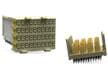
TE Connectivity Z-PACK HM-Zd Plus Connectors
Updates the daughter connections to enhance performance, resulting in lower cross talk.
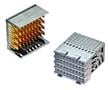
TE Connectivity Z-PACK HM-eZd+ Backplane Connectors
Better electrical performance at true 25Gbps speeds & meets 100Gbps ATCA specifications.
Published: 2019-01-17
| Updated: 2022-03-11